
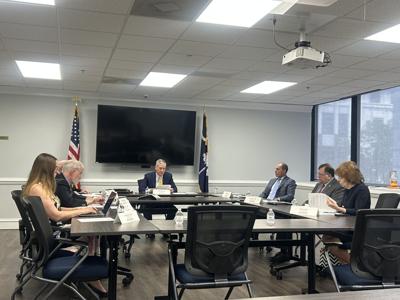
COLUMBIA — South Carolina can send voter information to the U.S. Department of Justice under an agreement the State Election Commission approved Tuesday.
The commission’s 4-1 vote ended months of deliberation over how South Carolina should respond to the Trump administration’s request to review voter data in an effort to remove those ineligible to participate, which prompted privacy concerns.
Commissioner Joanne Day was the only “no” vote. Afterward, she said she still had constitutional concerns but declined to elaborate.
A representative for the Department of Justice has already signed the nine-page agreement. Election officials plan to transmit the voter rolls within the week, Belangia said.
“We feel like the agreement is protecting those things that we need protected,” Belangia said.
South Carolina voters’ data sent to the Department of Justice includes voters’ full names, birthdays, addresses and the last four digits of their Social Security numbers. All of that information, other than Social Security numbers, is already available for purchase, and all of it is sent to a nonprofit called ERIC, or Electronic Registration Information Center, that shares voter information among states.
The only data the federal agency asked for that the state did not agree to provide were voters’ driver’s license numbers. The agency asked for either Social Security numbers or driver’s license numbers, and the state elections office doesn’t consistently collect the latter, Belangia said.
All data will be encrypted, and the last four digits of voters’ Social Security numbers will be encoded on top of that, giving them an extra layer of security, Belangia said. The agreement also includes strict rules about who can access the data and how, and it prohibits the Department of Justice from sharing the information with other agencies, he said.
“That’s about as secure as we can possible make it at this point and protects the information of South Carolina voters,” Belangia said.
The commission changed the agreement to stipulate that the state would not automatically remove any voters the Department of Justice deemed ineligible from the voter rolls. Instead, state election officials will verify that those voters were improperly registered, Belangia said.
He would rather be safe than sorry when it comes to people’s access to the polls, he said.
“I’d much rather have a mistake made before somebody comes off the rolls than to remove them and have them show up at a polling place and say, ‘Where’s my name?’ and they are qualified,” Belangia said.
The Trump administration began asking states to hand over their voter rolls, including information not typically made available outside elections offices, so the justice department could search for ineligible voters last July.
At least 29 states and Washington, D.C., refused, prompting lawsuits from the Department of Justice. The agency has pointed to requirements that it enforce federal voter laws, such as the 2002 Help America Vote Act that reformed voting systems nationwide, as the reason it should have access to the information.
But the request caused privacy concerns, as voters wondered what the federal law enforcement agency wanted with their data. In South Carolina, those requests prompted a lawsuit. Although the case is ongoing, a judge declined to stop the release of voter data, pointing to the potential agreement.
SC Daily Gazette is part of States Newsroom, a nonprofit news network supported by grants and a coalition of donors as a 501c(3) public charity. SC Daily Gazette maintains editorial independence. Contact Editor Seanna Adcox for questions: info@scdailygazette.com.