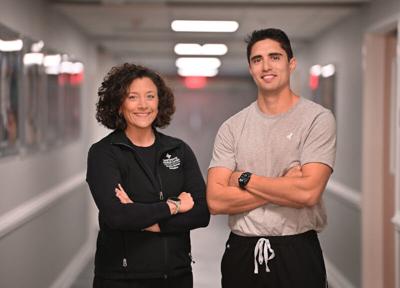
As a critical care nurse, Kenneth Human is used to being the one patients go to for help.
So, when he suffered a stroke on the job in October 2025, he was hesitant initially to acknowledge his own need and ask others to care for him.
"I was embarrassed at first. I remember my vision going crossed and couldn't see straight. I lost my balance and leaned up against a wall as someone walked by," Human said, adding that he had been preparing for an upcoming CrossFit competition.
He looked at his watch to note the time, understanding that if he was having a stroke, time was important.
Shortly after that episode, he made his way to a nursing station in the critical care unit and looked visibly distraught. He had to sit down and ask for water. By now it was evident something was off, so the medical team rushed him to imaging to confirm that he had suffered a stroke. As a result, providers administered a clot-busting drug since he was within the appropriate window of time.
“I’ve always taken care of my body and been thoughtful about what I do with my body and put in my body,” Human said. “So, it was difficult to be on the other side of it.”
Human suffered a stroke but made a full recovery after weeks of rest. Doctors determined he had a rare genetic condition in his heart that makes him more susceptible to strokes.
Reflecting on his experience, Human, now working as a nursing educator, thanked his colleagues for handling his emergency with such care and attention. He reminds others to pay attention to their bodies, especially when something feels off, and to never be afraid to ask for help.
Everyone should be aware of the signs and symptoms of a stroke. The acronym B-E-F-A-S-T should be top of mind as we raise awareness, Human said.
· B – Sudden loss of balance
· E – Loss of vision in one or both eyes
· F – Face looks uneven or drooping
· A – Arm or leg becomes weak or is hanging down
· S – Speech is slurred or there is confusion or trouble when speaking
· T – Time is critical. Call 911 immediately.
Spartanburg Regional is recognizing Stroke Awareness Month this May by sharing the BE FAST acronym to alert people to the signs and symptoms of a stroke.
Recognizing the early warning signs of stroke is critical and can make the difference between recovery and long-term disability. The acronym BE FAST remains one of the most effective tools for the public. Even subtle symptoms, such as sudden dizziness or vision changes, should never be ignored.
Crystal Moss, chest pain and stroke program coordinator at Cherokee Medical Center and former ER nurse, is leading efforts to get more statistics and awareness messaging into the hands of patients and families this month.
“Time is crucial for stroke treatment,” Moss said. “We can do things to lessen your symptoms if you get to us in time.”
If timing is delayed you can have lingering after-effects of a stroke that include fatigue and mobility issues, Moss said.
Acting quickly ensures patients can receive time-sensitive treatments that may significantly reduce the impact of a stroke.
South Carolina is one of 11 states considered in the “Stroke Belt.” All of these states have a higher post-stroke mortality rate than other states, Moss said.
Understanding the risk factors that increase the likelihood of stroke is so important, Moss said. High blood pressure remains the leading cause, but other conditions such as diabetes, high cholesterol, smoking and atrial fibrillation also play major roles. Lifestyle choices matter. Maintaining a healthy diet, staying physically active and managing chronic conditions can dramatically lower an individual’s risk. Preventive care and routine check-ups are key components in identifying and addressing these factors early.
Developing an exercise plan or simply walking regularly can also help, Moss said.
Raising awareness about recovery resources not only prepares patients and families for what lies ahead but also reinforces the message that while stroke can be life-altering, timely care and continued support can lead to meaningful recovery.
Through his trial of experiencing a stroke, Human said his faith has grown, and he has learned to cherish his time with his wife and two sons.
“This has given me a new perspective on life,” he said.
Spartanburg Regional has long provided high-quality stroke care; receiving the first primary stroke certification in South Carolina in 2005. Spartanburg Medical Center, Spartanburg Medical Center - Mary Black Campus, and Pelham Medical Center are certified as stroke centers.
To learn more about stroke awareness, call 864-560-6000 or schedule an appointment with your primary care doctor to discuss ways you can prevent a stroke.