
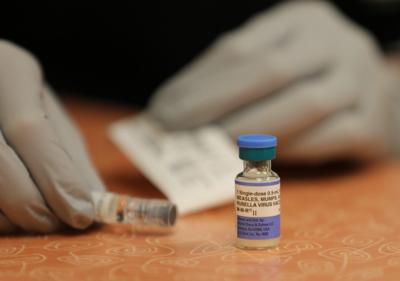
COLUMBIA — More than 150 unvaccinated students in Spartanburg County have been told to stay home from school as a measles outbreak continues to spread, South Carolina Department of Public Health officials said Thursday.
Seven people have contracted measles in an outbreak involving students at Fairforest Elementary School, which is part of Spartanburg School District 6, and Global Academy, a public charter school, department officials said. The two reported a combined attendance of nearly 1,400 students during the 2024-2025 school year, according to Department of Education data, meaning at least 11% of their joint student body has not received the measles vaccine.
In total, the state has reported 11 cases of measles so far this year, the highest number since the disease was eradicated more than two decades ago. All 11 people were unvaccinated, and none had immunity from a previous infection, according to the department.
The department reported its latest confirmed case Thursday, in a Greenville County child. Officials are working to determine whether the child had interacted with anyone at the two schools involved in the outbreak, or if the infection came from a different source, state epidemiologist Linda Bell told reporters.
“What this new case tells us is that there is active, unrecognized community transmission of measles occurring in the Upstate, which makes it vital to ensure that the public have received the recommended measles vaccinations,” Bell said.
Exposed students
Measles symptoms usually start with a fever, cough, red eyes and runny nose, followed by a rash that typically begins on the face before spreading to the rest of the body. The rash can last up to a week.
Severe cases of the virus can cause pneumonia or brain swelling, which can be fatal, especially in young children, according to the public health department
Anyone with symptoms should stay home from school or work and contact a doctor, according to the agency.
The virus can linger in the air for up to two hours after a sick person passes through a room, making it possible to get sick without directly interacting with an infected person, Bell said. With that in mind, health officials identified 153 unvaccinated students exposed to the measles at the two schools.
Exposed students are expected to stay home for 21 days, which is how long the virus can stay in a person’s body before they realize their sick, Bell said. Although people exposed to measles are typically not infectious until they begin showing symptoms, a person also might not recognize it’s measles causing their cough, runny nose or red eyes, giving the disease time to spread undetected, she said.
Because the quarantined students received different levels of exposure, it’s difficult to project how many of those might actually get sick, Bell said.
“In a school population, you can imagine, with the moving from room to room, moving through hallways, it’s not easy to identify the specific degree and duration of direct contact that could lead to someone being at higher risk of developing disease than others who still fit the definition of exposure,” she said.
Up to 90% of unvaccinated people exposed to the measles will get the virus, Bell said.
Low rates of immunity
South Carolina requires all children enrolled in school, both public and private, to be up to date on vaccinations, though there are exemptions granted for religious or medical reasons.
Spartanburg County, the center of the outbreak, has one of the lowest vaccination rates among school children in the state, according to health department data provided to the SC Daily Gazette.
A little less than 90% of K-12 students at the county’s 94 public schools submitted completed vaccination forms this year.
That’s the third lowest rate of any county in the state, DPH data show. Only Jasper County, at 82%, and Fairfield County, at 89.4%, have a lower rate of valid immunization certificates, according to the data.
The department does not break down data by school district or type of vaccine.
The overall rate of students coming into school with all their immunizations has dropped in recent years, from more than 98% statewide a decade ago to 94% during the most recent school year, according to agency data.
Health officials strive for a vaccination rate of about 95%, which is high enough to keep the virus from spreading, Bell said.
At the same time, the rate of students receiving religious exemptions has risen, from less than 1% in 2014-2015 to more than 3.3% during the last school year — or about 22,000 more unvaccinated students statewide. These exemptions have been steadily climbing for years, but they increased significantly when students returned to school following the COVID-19 pandemic, according to the data.
The qualifications for these exemptions have not changed, but for the first time this year, parents could access the forms for religious exemptions online instead of needing to visit their local health department to get a copy.
The one-page form requires parents to certify they have read all information, provided by the department, on the health risks associated with not vaccinating their child. The form also tells parents that their child can be sent home from school if there is an outbreak. A parent or guardian must then get the form notarized before submitting it to the school nurse.
More than 8% of Spartanburg County’s 58,000 students received a religious exemption during the 2024-2025 school year, by far the most of any county in the state, according to DPH data.
Schools respond
Three of the confirmed cases involved students at Fairforest Elementary, which had about 830 students last year — the most recent data available. All students in the district who have not received the vaccine are expected to attend class virtually and complete assignments at home, district spokeswoman Cynthia Robinson said in an email.
“We want to reassure our families that no additional measles cases have been reported at any other schools within Spartanburg County School District Six,” Robinson said in a statement. “Our top priority remains the health, safety and education of our students and staff.”
Global Academy, which had 565 students in kindergarten through eighth grade last school year, declined to comment.
The Department of Public Health does not release the age, sex, identity or specific location of people who contracted the virus out of privacy concerns, Bell said.
Parents with children at the schools did receive emails informing them there was an outbreak and telling families what they should do to prevent further spread of the disease, Bell said.
“We really rely on these families to comply with our guidance, to make sure that even if they’re excluded from school, they’re not out and about in the community,” she said. “Compliance is very important with supporting our prevention of ongoing spread in the community.”
SC Daily Gazette is part of States Newsroom, a nonprofit news network supported by grants and a coalition of donors as a 501c(3) public charity. SC Daily Gazette maintains editorial independence. Contact Editor Seanna Adcox for questions: info@scdailygazette.com.