
Spartanburg and Cherokee Counties have welcomed their first Reentry Coalition, a program designed to help incarcerated individuals reenter the community upon release.
The dual-county coalition had its first meeting on Friday, Aug. 22, with representatives from the city, local ministries, transitional housing groups and addiction medicine specialists. The group plans to reconvene in late September, focusing on strategies to help justice-involved people move back into the workforce.
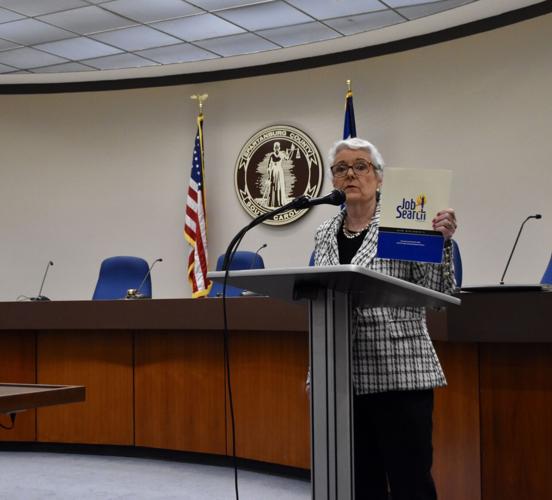
The driving force behind the coalition is Mary Uhlir, a twice-retired individual with a history of passion for underserved populations. Before moving to the area last December, Uhlir lived in Southern California, where she served the Los Angeles County Department of Public Social Services.
Following her first retirement, Uhlir founded a nonprofit, where she taught workshops about job development in the local community center. She also started teaching these classes in the local jail, her first experience working with the incarcerated population. In 2022, she moved to New Jersey, where she encountered something new — a reentry coalition.
“What it was is all the agencies and services that help justice-involved individuals transition into the community,” Uhlir said. “It makes the community safer, cleaner and reduces the population in the detention center because you avoid the ‘frequent flyers.’”
By frequent flyers, Uhlir is referring to incarcerated people who are released but later re-detained. According to studies from the Bureau of Justice Statistics, an estimated two-thirds of formerly incarcerated people will be reincarcerated within three years of their release.
After seeing the work done by the reentry coalition in New Jersey, Uhlir was inspired to bring that same work to her new home in the Upstate.
“So I decided, ‘well, why can't we have one?’” Uhlir said. “There are a lot of people in that detention center. And there are a lot of people who get out and come back … and if we join together, maybe we can solve some of these issues.”
Now, the newly founded Spartanburg & Cherokee Counties Reentry Coalition looks to its first goal — empowering incarcerated individuals to rejoin the workforce. This involves helping recently-incarcerated people apply for jobs, as well as ensuring they have adequate transportation to work once hired.
Uhlir notes that the formerly-incarcerated population faces large amounts of workforce discrimination.
“... A lot of times, before they even talk to somebody, they're discarded, which is not fair,” Uhlir said. “Look at the person first, and then we'll deal with whatever the conviction is, and we'll figure it out.”

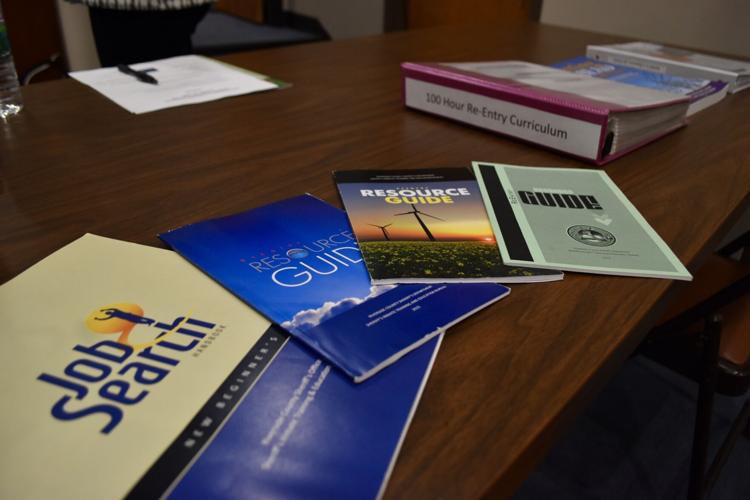
Educational materials on the reentry process.
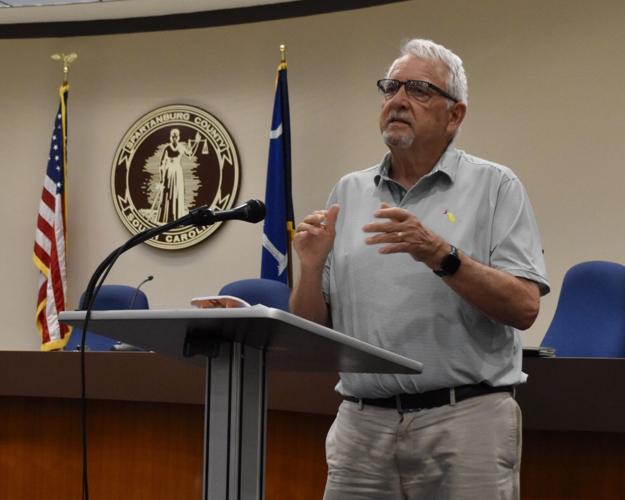
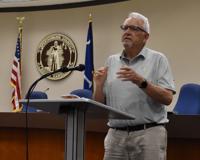
At the Coalition’s first meeting, two guest speakers shared their experience working with justice-involved individuals. Stephen Patterson, an executive member of the South Carolina Reentry Coalition, spoke about his work in getting reentry education into the curriculum at Columbia College.
“Right now, criminal justice only focuses on lockup,” Patterson said. “Very little about reentry, about what happens next.”
He continued: “... [The program] is growing, and hopefully it’s an impactful program that’s making a difference.”
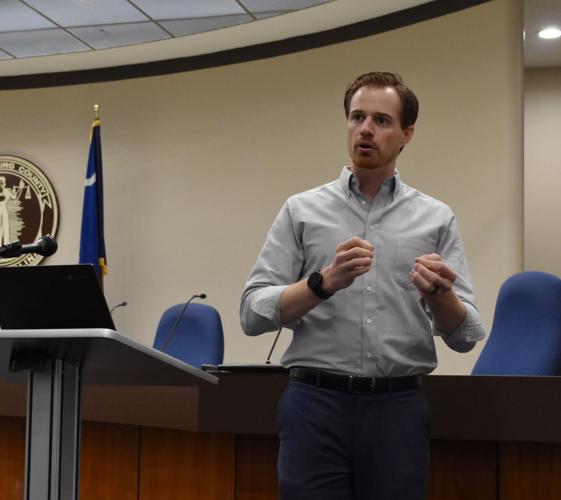
The other guest, Jon Antonucci, a speaker with Toastmasters International, told the group about his experience giving talks at prisons. He starts his speech by giving his background — a current business owner and former international director of an organization, but also, a man who spent 14 years in the Arizona Department of Corrections.
Antonucci spoke to the group about the importance of helping incarcerated individuals regain their autonomy throughout the reentry process. One thing he said he found in his own reentry journey was that, while there were many “handouts,” there weren’t a lot of “hand-ups.” He encouraged the group to remember to give the populations they serve autonomy over their reentry process.
“These are people, not problems,” he said. “... These are individuals who are redeemable.”
While the coalition hopes to eventually tackle a swath of issues impacting formerly-incarcerated individuals, the initial goal will be to facilitate workforce development for these populations. Later, the group also wishes to tackle issues such as housing and addiction services.
The next meeting for the Reentry Coalition will be in late September. County and city representatives from Spartanburg and Cherokee Counties, as well as anyone who works with justice-involved populations, are encouraged to attend.
For additional information on the coalition, contact Mary Uhlir at maryhamlin92220@gmail.com.
Follow Breanna Laws on X @GreerByBreanna