
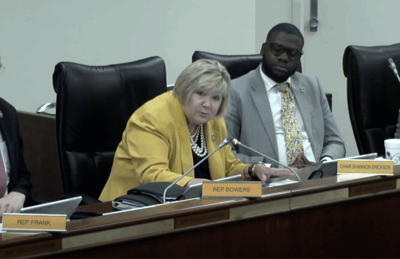
COLUMBIA — Teachers from certain other states could start working in South Carolina classrooms more quickly under a bill a House committee advanced Thursday.
The bill, which passed out of the Education and Public Works Committee 14-4, would make South Carolina the 14th state to join a compact agreeing not to make teachers reapply for the certification they need before starting instruction.
“We’re doing our best to fill vacancies in our classrooms with safe, sound, well-educated people, not very, very kind but untrained substitutes who are filling our classrooms,” said Rep. Shannon Erickson, a Beaufort Republican who leads the committee and sponsored the bill.
Under existing law, anyone licensed to teach in another state must apply for a South Carolina teaching certificate when they move. Approval from the state education department depends on how well their home state’s requirements align with those in South Carolina.
Automatically accepting out-of-state licenses could speed up the process and make things easier for teachers coming into the state, teachers’ advocates and supporting legislators said.
Those who have gone through the process of getting a teaching license in another state shouldn’t have to start over just because they’ve moved, said Dena Crews, president of the South Carolina Education Association.
“They’ve done the work already,” Crews said. “That needs to count for something.”
The compact initially started in 2023 with the goal of helping military families, who often need to move with little notice. If a military member’s spouse is a teacher, having an agreement to accept their licensure elsewhere could reduce some of the burden if they need to move to, for example, Shaw Air Force Base in Sumter, said Patrick Kelly, a teachers’ advocate with Palmetto State Teachers Association.
Moving is already a difficult process, and attempting to get the paperwork together to apply for certification can make it even harder, Kelly said.
“Anything we can do to diminish the burden on those families that are already serving our nation through uniform service, I think that’s just commonsense policy,” Kelly said.
The agreement would go beyond military families. Anyone moving into the state would be able to start teaching as soon as they found a job, potentially creating another avenue to fill the 706 empty teaching positions the state still had at the beginning of this school year.
That was a dramatic drop from the record-high number of vacancies schools reported after the COVID-19 pandemic, but anything the state can do to get more teachers is a good thing, Kelly said.
Plus, the state could then harness its recent influx of residents, said Ryan Dellinger, director of education policy for conservative think tank Palmetto Promise Institute. Many of those moving are retirees relocating to coastal regions, but others might be certified teachers looking for a new job, he said.
And even more might decide to move into the state with the agreement in place, Dellinger said.
Neighboring states North Carolina and Georgia have not yet joined the compact, so a teacher looking to move to the Southeast without a specific location in mind might choose South Carolina because they know they’ll have an easier time transferring their certification, Dellinger said.
Under the agreement, “South Carolina is suddenly a very competitive place to live,” Dellinger said.
If North Carolina and Georgia did decide to sign agreements of their own, that could also help the state’s recruitment efforts, Kelly said. Teachers just over the South Carolina border might decide to start teaching in the state if they didn’t have to get another certification, he said.
“I’d love to make it even easier for their certified educators to come to South Carolina and work with our students,” Kelly said.
That could cut both ways.
Other states would recognize South Carolina’s certification in turn, potentially drawing some teachers away. But with the state’s growth and recent improvements in teacher salaries and working conditions, that’s not likely to make a major difference, Kelly said.
Last year, the Legislature passed the Educator Assistance Act which, among other things, made renewals of teacher certificates easier, guaranteed planning time, and required districts to tell teachers their expected salaries before they sign contracts.
As for pay, the state’s minimum salary for first-year teachers has risen from $30,113 in 2017 to $48,500 this school year.
Following the governor’s recommendation, the House’s first draft of the state budget would increase state-paid minimums by $2,000 across the so-called teacher salary schedule, which pays teachers by years of experience and college degree. That means no first-year teacher could make less than $50,500 next school year. Many districts pay above the minimums.
“This is a place where educators want to come work,” Kelly said. “Let’s make it to where they can come and do it.”
How much time and trouble the proposal would save teachers moving from a state within the compact would vary.
Under the existing process, the timeline depends on how quickly teachers can get together the information needed for the application. Kelly likened it to the process of getting a passport.
“How quickly you can do that is dependent on how quickly you can put your hands on the paperwork that you need,” he said.
Teachers with less than three years of experience must finish more testing to gain additional certificates required. And all newly arriving teachers, regardless of their experience, must complete an evaluation of their skills before they can receive a long-term state certificate that renews with professional development, according to the Department of Education.
The proposal would erase those steps for teachers coming from a state within the compact.
‘Simply an option’
Most of the pushback on the bill Thursday came from several of the House’s most conservative members, who worried about the state giving too much of its authority to other states, especially those with Democratic majorities.
Teachers in Washington, for instance, are required to undergo training on diversity, equity and inclusion to earn their teaching certifications, which could influence their teaching, said Rep. Stephen Frank, a member of the ultra-conservative Freedom Caucus. Or, the commission overseeing the compact might try to pressure South Carolina into accepting similar requirements, he said.
“While on day one I don’t see that posing a great threat to us, in this compact, it sets up this commission, which will then promulgate rules, and we have no idea what those rules may be or may become,” the Greenville Republican said.
While the bill makes it easier for out-of-state teachers to hunt for jobs, schools don’t have to hire them, Erickson said. And South Carolina keeps control of its licensing process, meaning the commission would have no control over how it certifies teachers, she said.
“It simply allows an open door in one piece — literally one piece — of their qualification to not have to wait,” Erickson said. “It’s not saying that they have to be hired. It’s simply an option.”
South Carolina has agreements to recognize out-of-state licenses for other professions, including nursing, physical therapy, mental health therapy, social work and corrections officers, Erickson said. Boating licenses also apply between states.
Teachers should get the same treatment, Erickson said.
“I think these partnerships are really important,” Erickson said. “They’re a good way of making sure that if you do have someone who’s saying, ‘Oh, well, I might want to move in this area of the country right now, we’re going to stand out.’”
“That’s really never a bad thing,” she added.
SC Daily Gazette is part of States Newsroom, a nonprofit news network supported by grants and a coalition of donors as a 501c(3) public charity. SC Daily Gazette maintains editorial independence. Contact Editor Seanna Adcox for questions: info@scdailygazette.com.