
(StatePoint) Nothing tests an old house like the first hard freeze. It settles in overnight, and by morning the slow drip under the kitchen sink finally gets its moment.
For many homeowners, an older home’s weak spots are no surprise. In a T-Rex Tape survey of 1,000 Americans, 53% live in a home more than 20 years old. Among those who say they face more unexpected repairs than five years ago, 56% name the same leading cause: the house itself is getting older.
"Cold weather finds every weak spot an older home has, and it tends to find them in the same few places," said Kerry Haugh, director of Product Marketing for T-Rex Tape. "The best time to deal with them is before the deep freeze arrives, and well before company comes. One afternoon of fixes now, and the home is ready for the season.”
Why older homes face unexpected repairs
Over the years, an older house gets a little less airtight and a little less watertight. Fixing a slow leak or loose seam is easy to push back with busy schedules, but waiting is where it gets expensive.
More than one in three people (36%) say unexpected damage grew larger or more costly because they put off fixing it.
Which parts of an old house fail first, and what each one needs
While the wear shows up in different places, the fix has to do the same reliable job in each: grip, hold and seal.
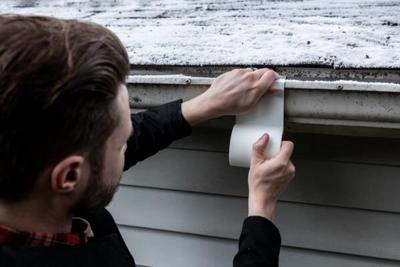
Where worn-out gutters and siding give up. Years of sun, rain and snow leave them rough and weathered, so a repair needs to grip the uneven surface.
The plumbing leak nobody has gotten to. Fittings loosen in damp, awkward corners. The fix has to hold on a wet surface and stretch around it.
The patio cover and outdoor equipment that have seen too many seasons. Covers and tarps tear wider than standard tape, and the patch has to cover the whole tear discreetly.
The basement crack and the sheeting that let the cold in. Long seams in tight, dim quarters leave little room to work, so a repair must work fast and seal out moisture and air.
Built for these jobs, T-Rex Heavy-Duty, Extra-Wide Waterproof & Repair Tape’s acrylic adhesive bonds to rough and hard-to-stick surfaces and is initially repositionable. The thin, extra-wide design seals out water, air and moisture, with an application range of 20-120 degrees F. It is also the only waterproof tape designed to tear by hand with a liner-free backing, which helps when your fingers are cold and the scissors are in the garage.
Duct tape or repair tape: how to choose
The hardest part of a winter repair is often deciding what to use.
"Nobody wants to compare a wall of options the day repairs are needed," Haugh said. "Pick one dependable fix that can handle multiple problems, and keep it on hand."
Plenty of people reach for duct tape out of habit, and for good reason. It works well on quick, dry, indoor jobs, like bundling cords, holding a loose cover in place or getting through a short-term fix.
Repair tape was made for harsher conditions. It stretches farther and conforms better to uneven surfaces, so it bonds and seals where duct tape would simply cover. A split gutter seam, a leaky fitting or a torn cover gets a patch that keeps water out and stays in place as temperatures swing.
A simple rule sorts most jobs: Match the tape to the work and the weather. For a quick, temporary hold in dry, mild conditions, duct tape is a handy choice. For a repair that has to stand up to cold, wet or outdoor conditions, and keep water, air and moisture out, repair tape is the better choice.
Learn more at T-RexTape.com.
A roll of the right kind of tape on the shelf before the deep cold settles in turns the next drip into a quick job instead of a long weekend of home repairs.
*****