
Absent statewide rules, South Carolina counties are hitting pause on the development of data centers to give them time to set their own standards.
Meanwhile, hundreds of residents showed up for a three-hour meeting in downtown Spartanburg Thursday evening with state environmental regulators about a $2.8 billion data center already under development in the Upstate county.
The meeting came four days after the county council took its first, unanimous vote on a one-year moratorium on future data center development.
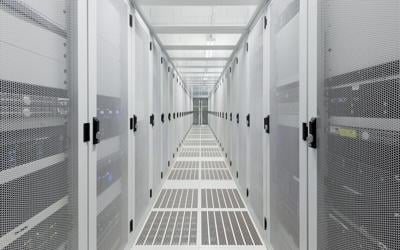
The largest of these centers — known as hyperscalers — are facing pushback nationwide amid a rush to build the computing necessary to support rapid advancements in artificial intelligence. The opposition is due in large part to the massive amount of energy required by the facilities, which include huge banks of computer servers, power and cooling systems and other components, a pain point for residents who are seeing their own monthly power bills continue to rise.
In addition to Spartanburg, Greenwood County started the process last week for its own 12-month pause.
Chesterfield and Newberry counties enacted ordinances early this month. Newberry County Council took its moratorium up after voting down a proposal that would have sold property in a county-owned industrial park to a data center developer.
And Colleton County, where a gigawatt data center previously was proposed for property not far from the environmentally sensitive ACE Basin, council took its first vote last month on a six-month moratorium as it reconsiders zoning rules that would have made the massive center possible in the first place.
Spartanburg’s moratorium impacts all pending applications that have not been finalized and can be extended beyond 12 months by a vote of council.
The moratorium also directs staff to research where in the county would be appropriate for future data center development. The council started the process after a new data center company applied for a land development permit for a site where a bitcoin mining facility has operated for several years.
Council members had hoped the state Legislature would have enacted state regulations on the facilities but a pair of Senate proposals never made it to the floor for a vote this session.
“I can understand counties wanting to be proactive,” said Sen. Tom Davis.
The Beaufort Republican authored one of the proposals setting rules for where the centers could be developed, as well as setting standards for water usage, power costs and noise control.
The bill would have created an office within the state Department of Environmental Services to handle permitting of the centers and identify areas of the state best suited to house them.
A data center in the ACE Basin — a 350,000-acre undeveloped estuary in the Lowcountry named for the Ashepoo, Combahee, and Edisto rivers that feed it — is “just ridiculous,” Davis said.
“It really is frustrating to me that we didn’t get a bill passed,” Davis said. “I understand counties, absent the state implementing these baseline protections, simply taking the approach that they don’t want data centers built until we have safeguards in place.”
In addition to the newly proposed data center blocked by the new moratorium, residents of Spartanburg County successfully pushed back on a different data center proposal by a company called TigerDC, which was seeking property tax incentives to develop in the county. In February, the company withdrew its application.
Now disgruntled residents and environmental groups have turned their attention to a project already underway.
NorthMark Strategies, along with its subsidiary Valara Holdings, is converting a former Kohler kitchen and bath manufacturing plant into a computing center.
As part of the development, the company plans to generate its own power for the center, rather than adding demand to the grid as other such centers have done.
State regulators initially approved the company for about 50 megawatts. But the company has since sought to amend its application to a total of 450 megawatts.
It’s that application that brought hundreds of residents to a downtown Spartanburg auditorium Thursday to voice their concerns. In addition to the public hearing, the company held an online informational session Wednesday.
While the center doesn’t raise the same concerns over impacts to residential customers’ power bills, air pollution as well as noise from the generators dominated the conversation, said Emily Wyche, an attorney for the Southern Environmental Law Center.
The facility is already permitted for 24 natural gas generators that each produce 2,000 kilowatts. The new request, submitted to the state Department of Environmental Services in March, asks for an additional five 17-megawatt natural gas combustion turbines and six 54-megawatt natural gas combustion turbines.
The increase led the Southern Environmental Law Center to raise the alarm about potential air pollution at the facility.
In addition to going through the environmental permitting process, the Southern Environmental Law Center has petitioned state utility regulators to conduct their own review. It is also asking the Public Service Commission to halt construction at the site until a final ruling can be made.
Wyche argues that the Public Service Commission takes a more holistic view, “weighing the different sort of impacts against alleged benefits of a facility,” rather than just looking at it through an environmental lens.
The hearing for the construction pause is scheduled for July 13 in Columbia.
SC Daily Gazette is part of States Newsroom, a nonprofit news network supported by grants and a coalition of donors as a 501c(3) public charity. SC Daily Gazette maintains editorial independence. Contact Editor Seanna Adcox for questions: info@scdailygazette.com.