
COLUMBIA — Senators want to step on the gas for roadbuilding, they said in advancing a bill that would allow toll lanes and have South Carolina take over the environmental permitting process.
The bill passed 37-1 last week, moving the debate to the House. The lone “no” vote came from Sen. Lee Bright, a Roebuck Republican.
Other changes in the bill include providing the transportation agency more exemptions from the state’s multi-step bureaucratic purchasing process, and giving cities and counties a deadline for reviewing projects within their borders. The bill makes no changes to state fees or taxes.
“The purpose is to deliver projects faster and in a more economical fashion,” said Senate Transportation Chairman Larry Grooms, the main sponsor.
Major population growth and inflation were big drivers behind the proposal, said Sen. Sean Bennett, a Summerville Republican and co-sponsor on the bill. More people on the roads means more traffic and more wear-and-tear on the pavement. At the same time, higher costs are slowing timelines for improvements. The taxes that fund roadwork don’t go nearly as far.
“One of the biggest challenges that we have is getting roads from the drawing board to construction to ribbon-cutting as quickly as possible,” Bennett told fellow senators.
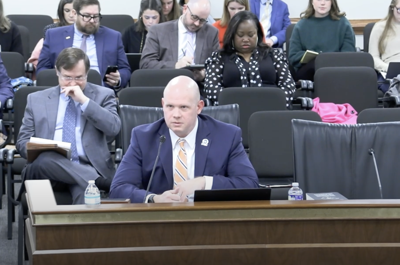
The Department of Transportation is “delivering what we were asked to deliver” under the Legislature’s last major transportation system change, which came in 2017, transportation Secretary Justin Powell told senators last week. That law incrementally raised the state gas tax — by 12 cents a gallon over six years — and increased travel-related fees so the agency could fix deteriorating roads.
But legislators of nine years ago couldn’t anticipate the massive influx of residents South Carolina has seen or the recent surges in construction costs, Powell said.
“We will be tuning up and supercharging the engine,” Powell said of his agency during his annual State of the DOT presentation last week. “But in order for that engine to go further than it ever has, it will need the fuel to power that engine.”
When the 2017 bill passed, each penny of the gas tax raised about $35 million, which could pave 114 miles of two-line highway, Powell said. In 2025, that same penny could pave 87 miles. Costs have skyrocketed in similar ways across the board, and asphalt prices could continue to rise alongside gas prices, he said.
Since 2021, highway construction costs nationwide have increased by more than 60%, according to a federal Department of Transportation index that tracks winning bids for major components of roadwork, such as asphalt, grading, electrical work, and concrete.
Gov. Henry McMaster asked legislators to put $1.1 billion into roadwork this year in his executive budget to help cover those increased costs and get ahead on planned projects. The House’s first draft of the budget fell far short of that ask, proposing instead $400 million for bridge repair, highway expansions and a road buy-back program for counties willing to control local roads.
The Senate is still working out its spending plan, which will have to take into account millions of dollars in tax cuts the chamber has passed.
Environmental permitting
One way of speeding up the process would be for the state to take over the process of environmental permitting from the federal government, Bennett said.
Major projects can wait years for approval from the U.S. Army Corps of Engineers, especially after federal cuts reduced the number of staff members working through the state’s requests, Powell said. The bill would give the agency the go-ahead to seek permission from the federal government to create its own panel meant to evaluate and approve permits, which nine states already do, Powell said.
“I think by having us in the driver’s seat, it allows us to consider the natural and cultural unique heritage that we have in South Carolina,” Powell said.
It could shave months or years off the process, he said.
The agency already has people poised to start the yearlong process of getting that permission if the bill passes, Powell said. The agency’s existing environmental team would then take over the task of making sure upcoming projects meet federal standards.
Changing who signs off on projects “does not change the rules,” Bennett said. The state would have to meet the same bar as before. But projects would get much faster approval without getting bogged down among applications across the country, allowing for quicker turnarounds, he said.
The 2.5-mile Berlin G. Myers Parkway in Bennett’s home of Dorchester County took more than two decades from funding to completion because it got snarled in the federal permitting process, he said. Putting the state in charge could have shepherded that project through years earlier without jeopardizing the environment around it, he said.
“This just allows our agencies to take control of the speed at which that progresses,” Bennett said.
Choice lanes
Tolls are never popular among legislators. But if legislators want the transportation department to continue building highway expansions with price tags that top $1 billion, they need some way to fund them, Bennett said.
“Folks, to be perfectly honest with you, there’s just not enough money to do some of these mega-projects in South Carolina any longer,” Bennett told senators.
Creating optional toll lanes, often called “choice lanes,” could bring in enough revenue to keep expanding the state’s highway system. Under the bill, the agency could build and operate choice lanes itself or outsource the construction to private companies, which would then collect the revenue.
Existing law allows the department to charge tolls only if the Legislature passes a law saying so. No highway that receives federal money can put a toll booth on an existing lane of highway and keep that funding.
Building optional toll lanes could benefit all drivers, not just the ones who pay to avoid traffic, Powell said.
Take, for instance, Interstates 526 and 26 between Mount Pleasant and North Charleston, Powell said. If legislators do nothing to clear up congestion, traffic studies suggest an afternoon drive on those 17 miles could take up to 45 minutes by 2040, Powell said.
Expanding I-526 from two lanes to four could take that commute down to about half an hour, he said. But it would cost the state an estimated $7 billion, which would eat up the agency’s budget for major projects for the next 15 years or longer.
Adding a “choice lane” to either side of the interstates could bring the drive down to 26 minutes for those who opted to stay in the free lanes and 12 for drivers who decided to pay. The project could cost close to $10 billion total, but revenues from tolls would likely cover at least half of that, or more, depending on how many people used the added roads, Powell said.
“This study indicates that a system of choice lanes could provide better commuting outcomes for residents regardless of if they choose to pay or not,” Powell said.
Some questioned the wisdom of outsourcing the state’s roads. Officials desperate to expand a road might sign onto a decades-long contract that benefits a company more than the state’s taxpayers, said Sen. Russell Ott.
Companies “can say, ‘I get it, but if you want me to come in and bring these billions of dollars and build this road for you, this is what it’s going to take,'” the St. Matthews Democrat said.
Two fiscal oversight boards would have to approve any deals, allowing officials to raise concerns on a case-by-case basis, Bennett said.
“We are never going to be able to legislate the right contract,” Bennett said. “That’s not our role.”
Toll lane proposals would go through the same process required for other agencies’ contracts: review by the Joint Bond Review Committee, a panel of representatives and senators, and approval by the State Fiscal Accountability Authority, a five-member panel chaired by the governor.
Not included in the version of the bill the Senate advanced were increased fees on new housing developments and electric vehicles. Senators worried a quirk in state law that requires revenue-raising bills to start in the House could get the whole proposal thrown out on a technicality.
Senators would support the House adding those proposals back in, Bennett said. Even if the bill stays as it is, though, it gives legislators a start in clearing the way for more efficient road projects.
“It’s probably not going to fix every problem that we have, but it’s a necessary component,” Bennett said of the bill as it passed the Senate.
Local roads and potholes
The state transportation department manages repairs and improvements on more than 41,000 miles of roads, make it the nation’s fourth-largest state-maintained highway system.
That’s too much, Bennett said.
“We have too large of a road network that the state is responsible to take care of,” Bennett said.
Offloading some of those roads to cities and counties could help the transportation department refocus on its most-used roads, Bennett said. The bill would create a fund to negotiate incentives for cities and counties to retake control of local, nonessential roads.
The bill would not force any local governments to take over roads. But legislators, who have for years tried to reduce the number of local roads the state agency oversees, hope it will encourage at least some cities and counties to take more responsibility for local thoroughfares, he said.
The bill would also address perhaps residents’ biggest complaint about roads: potholes. The department would have to create an app that allows people to report the precise locations of a pothole, then repair the hole within a week of the report.
That would mean “not just surface repairs but true repairs,” Bennett said.
The transportation agency would have to spend at least $15 million of its maintenance funds annually on fixing reported potholes.
SC Daily Gazette is part of States Newsroom, a nonprofit news network supported by grants and a coalition of donors as a 501c(3) public charity. SC Daily Gazette maintains editorial independence. Contact Editor Seanna Adcox for questions: info@scdailygazette.com.