
COLUMBIA — Pay raises for state employees and teachers, improvements to roads and bridges, and upgrades to prevent a future ballooning in South Carolina’s costs for federal grocery aid are part of a first draft of the next state budget approved Wednesday.
The spending package approved unanimously by the House budget-writing committee totals $15.4 billion, while taking into account cuts to income and property taxes legislators are considering. The full House will take up the package on the floor next month.
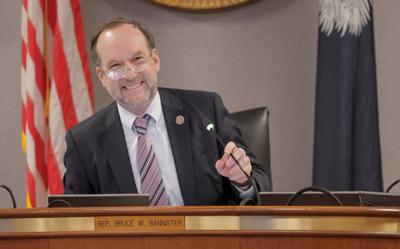
“We’ve been blessed the last several years, because South Carolina’s experiencing some extraordinary success,” said Ways and Means Chairman Bruce Bannister, R-Greenville. “Our population’s grown, our economy’s expanded, and opportunity is reaching communities across our state.”
The state can never fund everything agencies ask for, Bannister said. This year, agencies requested $1.85 billion in recurring money and $4.3 billion in one-time funding — more than three times what legislators had to spend.
The plan for the fiscal year starting July 1 includes nearly $250 million in income and property tax cuts that could be signed into law by session’s end. The Senate started debating Wednesday a proposal to reduce income tax rates that the House passed last year.
The amount needed to cover those cuts could still grow.
The plan forwarded to the House floor also allows for a $130 million expansion of property tax breaks. But the Senate’s property tax bill, which advanced Wednesday, could cost up to twice that amount.
Pay raises
Every state employee would get a 2% raise under the proposed spending plan, costing the state nearly $67 million. The state would also spend $34 million to cover increases in employees’ health insurance premiums, so they don’t pay more out of pocket.
Teachers would get raises, too. Every lane of the state’s teacher salary schedule, which sets pay according to teachers’ years of experience and level of degree, would get a $2,000 boost. The move, which would cost $150 million, would bring the state’s lowest-paid teachers up to $50,500 annually. That meets Gov. Henry McMaster’s goal, set four years ago, of a $50,000 salary floor for teachers by 2026.
The Palmetto State Teachers Association praised the move, saying it would lead to more teachers in classrooms.
“These efforts have been and will continue to be transformational for educators, students, and families across the state,” teachers’ advocate Patrick Kelly said in a statement.
Other educational costs
Along with increasing teacher pay, the budget would give K-12 public schools, including charter schools, $75 million to use for construction projects. That would help support rural schools with smaller tax bases and charter schools, which have no tax base at all, said Rep. Bill Whitmire, the Walhalla Republican who oversees the public education subcommittee.
Colleges would receive $371 million in one-time money. Most of that would go toward maintenance, renovations and security upgrades on campuses, said Rep. Nathan Ballentine, a Chapin Republican who oversees the subcommittee that writes the colleges’ budgets.
The Medical University of South Carolina received the biggest boost, with $175 million for a new cancer hospital. That’s half of what the Charleston university requested.
That “is a crucial investment to provide comprehensive cancer care throughout our state,” Ballentine said.
It follows major funding infusions to the state’s other major universities in recent years.
Clemson University received more than $230 million over several years to build the state’s first veterinary college, and the University of South Carolina got $150 million in the budget approved last year to build a specialized hospital for neurological diseases in Columbia.
Transportation
The House’s spending plan fell far short of the governor’s proposed $1.1 billion for the Department of Transportation to keep up with inflation and move forward with new projects.
The committee suggested giving the transportation agency half that amount. Around $250 million would go toward fixing the state’s aging bridges, slightly more than the $200 million legislators gave the agency for that purpose last year.
Another $125 million would go toward improving the state’s highways, with the goal of moving faster on major expansion projects. And $25 million would go to a road buy-back program for counties willing to take over the maintenance of local roads that are part of the state system.
Transportation is a priority among legislators as the state’s population continues to grow. More people driving on the roads means more traffic, as well as more wear and tear, said Rep. Heather Crawford, who runs the transportation subcommittee.
“Our growth and all the growth that we’ve experienced without infrastructure is just congestion,” the Myrtle Beach Republican said.
McMaster’s request also considered the state’s ballooning population, as well as huge increases in inflation, he wrote in a letter to budget writers last month. That request would have eaten up about 60% of the one-time money legislators had to spend.
“Anytime you take half a billion dollars out of the budget, then put it into one agency — the DOT — you get everybody’s attention on all the competing priorities that they have,” Bannister told reporters.
Other transportation needs also got a boost. The state’s airports would receive $70 million to improve their terminals, both in looks and capacity, Crawford said.
“Our airports are the front doors to our state for tourists and the loading docks for our high-value freight,” Crawford said.
Federal SNAP costs
A federal shift in grocery aid costs to states could take $59 million out of the state’s checkbook this year.
The budget proposal spends $25 million on technology upgrades to improve the state’s error rate, which could ultimately reduce the state’s future costs for the Supplemental Nutrition Assistance Program, commonly called food stamps. An additional $34 million would cover the state’s share of administrative expenses.
Starting in October, states must pay 75% of the cost to distribute the aid, up from 50%, as required under the massive federal tax package signed by President Donald Trump last July 4.
The state’s costs could balloon in future budgets.
Starting in October 2027, states will have to cover a portion of the aid if their error rate tops 6%. How much depends on their record for correctly distributing payments.
In 2024, South Carolina’s error rate was 9.25%, according to data released last summer. That’s better than the 22.6% for 2023, which state officials called an anomaly. But it would still require South Carolina to contribute 10% of the costs. Last fiscal year, that would’ve been $136 million.
Now that the error rate could have real monetary consequences for taxpayers, state officials need to make sure they’re minimizing that number, Bannister said.
“We just haven’t paid attention to it, because it was all federal money,” Bannister told reporters. “I think any of those pass-through programs we’re going to be taking a lot closer look at and trying to make sure the money is being used for what it’s supposed to be used for.”
Missing: Money for Scout
House budget writers declined to foot the bill for $150 million in construction cost overruns at the site of electric vehicle maker Scout Motors’ $2 billion assembly plant near Columbia.
South Carolina lawmakers in March 2023 agreed to spend $1.3 billion to bring Scout to the Palmetto State. But inflation and unexpected environmental costs left the state economic development agency short on cash to cover the bills, the Department of Commerce told budget writers last month.
Budget writers need more time to make sure the numbers from the Department of Commerce are accurate and why the state needs to cover even more of the cost, Bannister said. Once those questions are answered, the money could end up in the budget, he said.
“We are still working through what we need, who is owed what and whether that number is solid or not,” Bannister told reporters.
If the General Assembly does not agree to pony up the additional cash in the next state budget, the state commerce department could default on payments owed to construction contractors working on the site, putting the state in arrears for work that’s largely already been complete.
“And we would not have the money to pay them for several years under our regular funding,” Harry Lightsey, South Carolina’s economic development chief, said last month.
In its agreement with Scout, the state Commerce and Richland County agreed to contract and pay for all of the mass grading work at no cost to the company. And the costs of all associated environmental requirements were to be borne solely by the state and county. The state also agreed to complete the work on “an extremely aggressive schedule” to meet Scout’s production timeline of rolling the first cars off the line and into customers’ driveways by next year, Lightsey said.
To win federal environmental approvals, the agency ultimately had to up the ante on the acres and miles of stream protections it put in place to replace wetlands that were lost at the Scout Motors site. And while waiting for the nod from regulators at the U.S. Army Corps of Engineers, crews had to pause work for five months, tallying up an even greater bill.
Once the Corps allowed the state to resume work, Commerce spent additional funds to bring more crews on site and get its construction schedule back on track after a months-long delay.
Reporter Jessica Holdman contributed.
SC Daily Gazette is part of States Newsroom, a nonprofit news network supported by grants and a coalition of donors as a 501c(3) public charity. SC Daily Gazette maintains editorial independence. Contact Editor Seanna Adcox for questions: info@scdailygazette.com.