
by Edith Mwangi
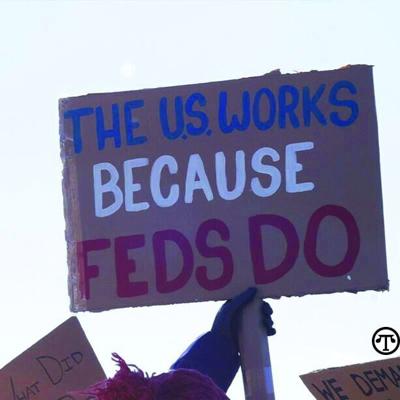
(NAPSI)—When a local water system breaks down or a rural school’s equipment upgrade stalls, the problem feels strictly local. But behind the scenes, those community improvements often depend on a complex web of federal grants, technical oversight, and agency operations.
We rarely think about the federal pipeline keeping daily life running smoothly—until the pipeline stops working.
In the wake of the Trump administration’s chaotic and haphazard cuts to federal programs and the federal workforce since last year, communities across the country have felt the immediate and damaging impact. “Local health coalitions end up spending time chasing down basic information instead of doing the work, time and capacity they don’t really have to spare,” said Breanne Danner, a former CDC Lead Project Officer who managed nationwide public health grant portfolios. “When you lose your Project Officer, you lose the person who actually knew your program. That institutional relationship doesn’t transfer to a generic inbox.”
The connection between federal funding and local outcomes often goes unnoticed, which is why the nonpartisan nonprofit Partnership for Public Service works with local news organizations in five states to make it easier to report on how communities are being impacted. The organization’s new Resources to Report on Federal Cuts offers a series of state-by-state impact guides covering Colorado, Georgia, Ohio, Texas and Washington.
Main Street Under Pressure
Designed as toolkits for local journalists, these resources track local service and funding cuts, legal cases and harms to the public, including:
- Georgia’s Tech Infrastructure: A freeze on $18 million in state unemployment IT modernization grants has forced labor officials to delay a critical cloud migration, prolonging reliance on a 43-year-old computer mainframe.
- Colorado’s Local Agriculture: A $13.1 million cancellation in local food purchasing funds has disrupted supply chains for rural schools, forcing them to abandon local farmers and revert to national corporate distributors.
- Ohio’s Water Rate Hikes: A freeze on $329 million in environmental utility grants, paired with a new rule requiring manual federal review of expenses over $50,000, has led municipal water boards to take on local debt to continue water treatment upgrades—resulting in an 18% utility rate increase for residents.
- Texas’s Public Services: The VA shed roughly 20,000 positions nationwide through attrition, spiking clinical shortages for the state’s 1.5 million veterans, while a freeze on $74 million in hazard-mitigation funding has marooned 11 critical storm drainage projects in hurricane-vulnerable Harris County.
- Washington’s Administrative Flow: Indian Health Service grant portfolios doubled from 100 to 200 grants per manager following staff transitions, while the dissolution of community conservation nonprofits has left local volunteer groups to handle regional trail upkeep.
Go Deeper
The Partnership also offers the Federal Harms Tracker, a suite of resources to help the public track the changes and impacts of federal cuts including its Cost to Your Community mapping tool, and The Cost of Cutting American Science.
What You Can Do
Understanding how federal executive policies affect your hometown is the first step toward effective civic engagement. You can voice your perspectives on federal funding choices to your representatives by visiting House.gov and Senate.gov. To support independent research tools that keep local communities informed, visit the Partnership Support Page.
About the Author
Edith Mwangi is a Journalism and Communications fellow at the Partnership for Public Service, a nonpartisan, nonprofit organization dedicated to building a better government and a stronger democracy.
Word Count: 546
 "Understanding how federal executive policies affect your hometown is the first step toward effective civic engagement."