
COLUMBIA — Faster drug screenings, legal limits on THC and longer jail sentences for people suspected of driving under the influence who refuse to take breathalyzer tests are part of a compromise legislators laid out Wednesday.
The bill, which is meant to strengthen the state’s DUI laws, was among legislators’ top priorities this year.
The House and Senate each unanimously passed separate versions of the bill, though the chambers didn’t agree on the details before the regular legislative session ended last month.
But on Thursday, the compromise laid out by a panel of senators and representatives was sent into limbo, after a procedural vote necessary to advance the bill failed.
Legislators opposed to a bill regulating THC beverages, which failed later Thursday in the House, were the same ones who voted against proceeding with the DUI bill.
And not enough senators were present Thursday to get the necessary 31 votes, or two-thirds majority, needed to move on, said Senate Majority Leader Shane Massey.
“A lot of it was just because of numbers,” Massey said.
“It was a bad day for public safety, wasn’t it?” he told reporters.
What happens next is unclear.
Legislators could raise the issue again, when they return to vote on the budget, in the hopes of getting a different outcome.
Or, the negotiating committee could go back to the drawing board and work out another plan.
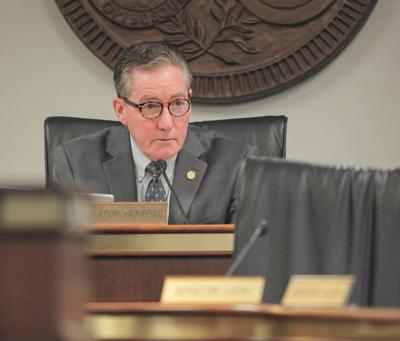
The chambers agreed on the proposal’s goal of cracking down on intoxicated drivers, said Sen. Greg Hembree, a former solicitor who led the negotiating committee.
South Carolina ranks among states with the highest fatality rates because of drunken driving, and legislators have said the state’s laws dealing with people whose actions injure others are too lax.
“This current situation is unacceptable,” said Hembree, R-Little River. “To me, it’s a scandal. I just think it’s terrible.”
Senators in support of the bill urged their colleagues to pass the proposal into law this year, instead of waiting until next year, when they have to start from the beginning.
“We have missed our time to address this,” Hembree said from the floor Thursday. “It’s passed.”
Blood draws and THC limits
In an effort to make it easier for police to determine whether someone is under the influence of drugs, the bill allows suspects who agree to blood tests to have their blood drawn at any permanent location with a medical professional onsite, including a jail or police station.
Blood draws are already an option in cases where a person seems to be under the influence of drugs. But that process requires toting a suspect to a nearby hospital, urgent care or testing location and waiting for a medical professional to be available.
Late at night, when many DUI arrests take place, officers often have to take suspects to busy emergency rooms. Many substances stick around in the bloodstream for only a few hours, meaning long delays could lead to inconclusive results, legislators said.
The compromise would instead allow a medical professional to draw blood at any permanent location, including a designated room at the police station.
Officers already take suspects back to the station for a breathalyzer test, so adding the blood draw there would expedite the process, said Sen. Brian Adams, a retired police officer.
“I think it’s just a better fit for law enforcement,” the Goose Creek Republican said.
Although both chambers’ versions of the bill allowed officers to test a suspect’s blood for THC if the person agrees, neither set a legal limit for how much THC, the psychoactive ingredient in marijuana, they could have in their bloodstream.
Marijuana itself remains illegal in the state, but through a loophole in federal law, drinks and chewables infused with THC remain unregulated.
Under the compromise, anyone whose test came back with 5 nanograms per milliliter or more of THC in their bloodstream could face between two and 30 days in jail for a first offense, up to a year for a second and up to five years for a third offense.
The bill also requires officers to go through extra training on how to determine whether a person is under the influence of drugs. Part of the routine training for new officers includes determining whether someone is drunk but not whether they’re intoxicated by another substance, legislators said.
Refusal to take tests
People who decline to take a breathalyzer or blood test could face steeper penalties under the compromise.
Declining a test would mean getting their license suspended for nine months for a first offense, two years for a second offense and three years for a third. Agreeing to a test that came in over the legal limit would bring shorter suspensions of three months for a first offense, six for a second and nine for a third.
Drivers with a suspended license could still get a temporary alcohol license, which is supposed to allow them to drive to and from work but doesn’t actually stop them from going anywhere else.
The penalties, though significantly higher, still aren’t enough, especially considering drivers can get a temporary license, Adams said.
“We’re still giving these first offense DUIs all the breaks,” Adams said. “They’re constantly getting the breaks, and we’re not holding them accountable for their actions.”
Prosecution
Most DUI cases are handled in traffic court by police officers, who often struggle to defend cases against trained defense attorneys. The compromise would create centralized magistrate courts with prosecutors dedicated to hearing DUI cases — but only in six counties for the first three years.
The Senate proposed establishing the system statewide, but the House struck that, with legislators arguing some counties couldn’t pay for more prosecutors.
“It was going to be a deal killer,” Hembree said of the proposal.
The state will instead fund the pilot program, though that money likely won’t come until the next budget cycle, since both chambers have already passed their spending plans for the year.
Legislators will use the first six counties, which have yet to be selected, to get data on how many more cases are dismissed in magistrate court compared with traffic court, Hembree said.
“That tells us a lot,” Hembree said.
Video recording
One question that remained after Wednesday’s agreement was whether failing to videotape a DUI arrest could allow a judge to throw out the case completely or move forward without that as evidence.
Senators generally agreed officers should have to videotape tests and arrests. Whether failing to do so should mean an automatic dismissal was where the chamber disagreed.
Officers are required under existing law to record every part of a DUI arrest, starting when they turn on their lights and including any tests given and the arrest itself. If an officer fails to do so, a judge can throw out the case, which advocates argued let too many people go free.
Taking that out of the law, as the Senate did, could remove important oversights for officers, said Rep. Robby Robbins. The House left that portion in.
“If you remove that language, there is no motivation whatsoever and no requirement for law enforcement to videotape the entire testing procedure,” the Summerville Republican said.
Existing law includes exceptions for equipment malfunctions. And legal precedent has cleared up that cases shouldn’t get dismissed because the suspect isn’t onscreen the entire time or because of gaps when an officer is switching from their body camera to their dashboard, Robbins said.
The chambers agreed officers should have to record the full testing procedure. The question came down to what happens if an officer doesn’t produce any video at all.
“Good lord, it ain’t real hard to cut on a light switch, and it ain’t real hard to cut on the video,” the Summerville Republican said. “It’s one button.”
SC Daily Gazette is part of States Newsroom, a nonprofit news network supported by grants and a coalition of donors as a 501c(3) public charity. SC Daily Gazette maintains editorial independence. Contact Editor Seanna Adcox for questions: info@scdailygazette.com.